
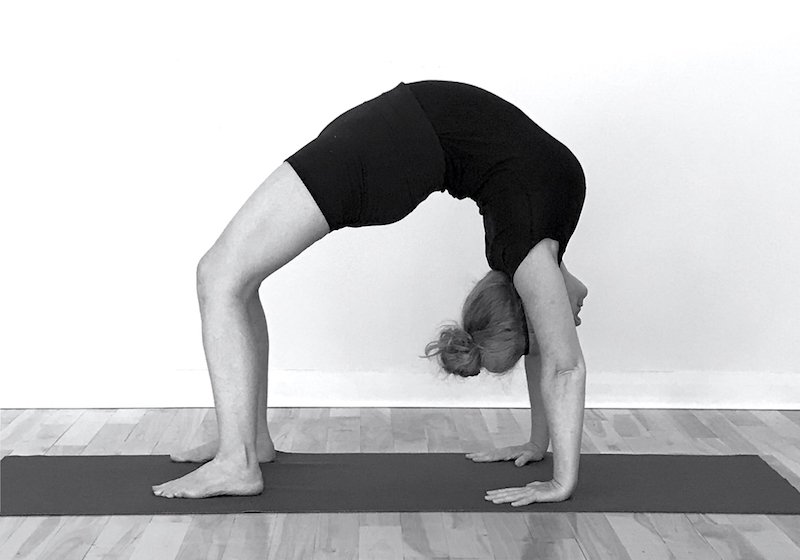
Have you ever observed your posture when you walk, sit for a long time, or even stand waiting for the subway or bus? Please take a moment and observe: how do you place your feet on the ground? Are they parallel or open? Are the spine and head well-aligned? Did you know that poor posture can cause pain in our body, lead to disc protrusions and hernias, and even affect our mood?
Our body is an incredible machine, built to function with maximum efficiency. This is not only true for muscles, bones, and joints but also for all internal organs (intestinal tract, lungs, kidneys, liver, etc.). If it is forced to function in a way other than its own, it can no longer provide satisfactorily either the quantity or the quality of work necessary for optimal functioning, and more energy will be needed to perform their function. As a result, fatigue will appear, muscles will sag, other structures will collapse causing pain, and even the inability to perform their own activity.
But what is the ideal posture?
We can compare our body to a building, where the base (or basement of the building) is the feet, the ground floor is the abdomen, the floors are the vertebrae, and the head is the roof of the building.
In an ideal posture, all these structures must be well-aligned so that the building does not present cracks, leaks, or even the collapse of a certain structure.
The feet should be parallel, the abdomen slightly contracted, the knees unlocked, and the head well-aligned with the spine (hand-to-head distance). The optimal hand-to-head distance is zero fingers away. Up to one finger’s distance is considered normal.
Hand-to-Head Distance: Ask a friend to place their forearm at a right angle to your spine and measure the distance from your head to their hand. How many fingers’ distance do you have for your head to touch their hand? Are you able to touch your friend’s hand with your head?
Otherwise, observe how you position your body: are your feet placed parallel to the ground? Do you put a lot of weight on your knees? Finally… Do you have good posture?
Visit your physiotherapist to assess your posture.
Reference: Ehrenfried, Dr, “Holistic Gymnastics – from body education to mind balance.” Aubier Montaigne Editions, 1956.
Physiotherapy/physiotherapy
Author
-
We are physiotherapists passionate about movement and rehabilitation, with a clear goal: helping people better understand their pain and return to an active, unrestricted life.
Through our practice and content, we share practical, science-based approaches to prevent injuries, relieve pain, and sustainably improve mobility. We believe that well-informed patients make better decisions and achieve better outcomes.

Richard Bouzaglou, B.Sc. PT
Physiotherapist | Co-Founder
An experienced professional, Richard is the co-founder of the AMS Medical and Rehabilitation Center, where he has played a key role since 2008. With a background in sports medicine and physiotherapy, he has developed strong clinical expertise, particularly working with elite athletes.
His practice is based on a comprehensive approach that integrates advanced manual therapy, functional rehabilitation, and personalized care. Committed to continuous education and mentoring students, he is known for his clinical rigor and his ability to build lasting, trust-based relationships with his patients.

Moshe Vazana
Physiotherapist
With over 15 years of experience, Moshe is recognized for his precise, evidence-based approach. A physiotherapy graduate with advanced training in several methodologies, including the McKenzie Method (MDT) and the Mulligan Concept, he specializes in treating musculoskeletal and spinal conditions.
His international background and commitment to excellence enable him to provide care that is tailored, effective, and sustainable. Passionate about knowledge sharing, he is also actively involved in training the next generation of physiotherapy professionals.
Recent Comments