

Neck pain affects a significant portion of the adult population, often without a clear understanding of its true underlying cause. Stiffness upon waking, a dull tension building by the end of the workday in front of a screen, or sharp discomfort radiating down into the shoulder – these warning signs are so common that they are frequently dismissed.
However, effective treatment goes far beyond temporary symptom relief. It aims to identify why the neck pain developed in the first place and, more importantly, what mechanical factors keep it coming back.
Physiotherapy directly targets neck pain by:
- Identifying the exact underlying source of cervical discomfort (whether muscular, articular, or neural)
- Reducing muscle tension and restoring full cervical range of motion
- Correcting postural mechanics and daily ergonomic habits that perpetuate chronic strain
- Addressing the entire kinetic chain, evaluating movement patterns from the cervical spine down to the pelvis
- Preventing long-term recurrences through targeted stability and mobility programs
Understanding the root causes of neck pain
The neck (cervical spine) supports the weight of the head – approximately 10 to 12 pounds (5 kg) – while offering remarkable mobility with minimal skeletal protection, making it exceptionally vulnerable to strain and injury. According to the Mayo Clinic, most neck pain cases stem from a few primary underlying causes.
Postural muscle strain
Postural strain is the most common cause of neck pain. Prolonged sitting while hunched over a laptop, looking down at a smartphone screen (“text neck”), reading in bed, or cradling a phone between the ear and shoulder places continuous overload on the muscles of the neck and upper back.
The Mayo Clinic notes that sitting for more than 6 hours per day is associated with an increased risk of chronic neck pain, particularly when that time involves computers or mobile devices. Teeth grinding (bruxism), often triggered by stress, also maintains persistent cervical and jaw tension.
Cervical osteoarthritis and bone spurs
As we age, the intervertebral discs and facet joints of the cervical spine naturally undergo wear and tear. In response, the body may form bone excrescences known as bone spurs (osteophytes), which restrict range of motion and cause localized inflammation. Known clinically as cervical osteoarthritis or cervical spondylosis, this condition is extremely common in adults over the age of 50.
Nerve compression (cervical radiculopathy)
Herniated discs or bone spurs can narrow the space through which spinal nerve roots exit, or even constrict the spinal canal itself (cervical spinal stenosis). When a nerve root is pinched, pain is rarely isolated to the neck; it typically irradiates down into the shoulder, arm, or hand, often accompanied by tingling, numbness, or muscle weakness.
Trauma and whiplash injuries
Rear-end motor vehicle collisions, falls, or sports impacts can throw the head abruptly backward and forward. This rapid motion – known as whiplash – violently overstretches the ligaments, muscles, and soft tissues of the cervical spine. Whiplash symptoms do not always manifest immediately and may present 24 to 48 hours post-impact.
Rare but critical red flag causes
While uncommon, neck pain can occasionally indicate underlying systemic issues:
- Inflammatory Arthritis: Such as rheumatoid arthritis affecting cervical facet joints.
- Infections: Including meningitis.
- Malignancy: Rare tumors or metastatic disease.
These severe conditions are exceptional, but they highlight the importance of professional clinical evaluation when neck pain is accompanied by red-flag symptoms like fever, unexplained weight loss, or progressive neurological deficits.
A major public health challenge in Canada
According to Health Canada, approximately 1 in 5 Canadians lives with chronic pain. A national survey indexed by the NCBI (National Center for Biotechnology Information) placed this prevalence at 18.9% among adults. However, this figure likely underestimates the true prevalence of cervical issues, as pain originating in the neck is frequently misdiagnosed as isolated shoulder, arm, or tension headache pain.
Physical therapy approaches that make a lasting difference
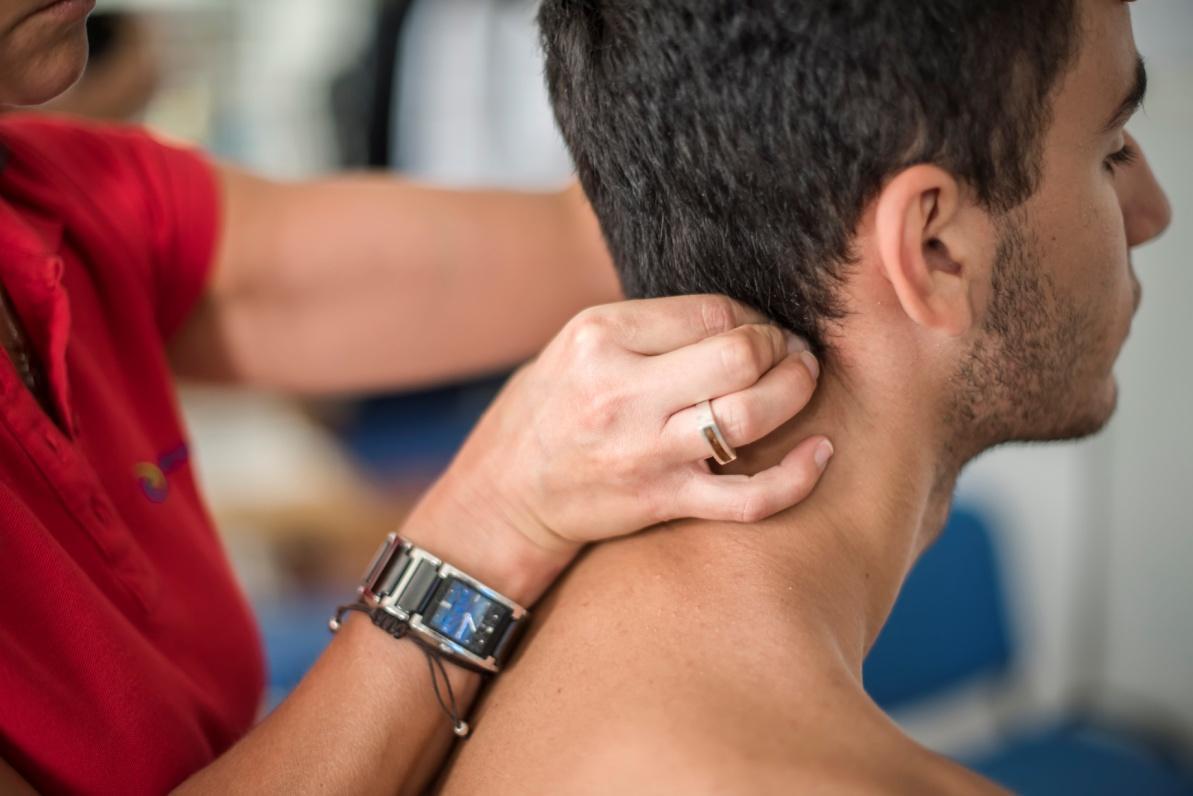
Hands-on cervical manual therapy
performed by a physical therapist to restore neck mobility.
Relieving acute discomfort is only the first step. Effective clinical management relies on a structured, multi-modal process:
- first pinpointing the mechanical driver of the pain,
- then selecting targeted evidence-based interventions to resolve it.
Comprehensive initial evaluation
Treatment begins with an in-depth physical assessment. Your physical therapist reviews your health history, ergonomics, and daily movement patterns before evaluating cervical range of motion, muscle strength, posture, and joint mechanics. This crucial step differentiates whether your discomfort is muscular, articular, or neural in origin while screening for any red flags requiring medical referral.
The McKenzie method® (MDT) and Mulligan concept
- The McKenzie Method® (Mechanical Diagnosis and Therapy): Utilizes specific repeated movements to evaluate how pain responds. A key objective in MDT is driving pain centralization – shifting symptoms radiating down the arm back toward the center of the neck. Centralization indicates a favorable prognosis and forms the basis for your customized exercise program.
- The Mulligan Concept: Combines gentle, therapist-applied joint mobilizations with active patient movement (Mobilization with Movement or MWM) to restore pain-free cervical motion.
The video below demonstrates the cervical retraction exercise, a foundational movement in the McKenzie Method® used to correct posture and relieve cervical pressure:
Manual therapy techniques
Targeted manual mobilizations and gentle manipulations focus on restoring mobility to restricted cervical facet joints. Hands-on therapy decreases joint stiffness, alters local pain perception, and sets the stage for active rehabilitation exercises.
Watch Video Below
Please note: The video audio is in French, with English subtitles available in the player settings.
Cervical traction for nerve decompression
When nerve root compression (radiculopathy) is present, mechanical or manual cervical traction helps increase intervertebral space, gently reducing pressure on spinal discs and irritated nerve roots. Traction is a non-invasive treatment option performed following a precise physical evaluation to confirm candidacy.
Progressive mobility and strengthening exercises
Deep neck flexors, upper back postural muscles, and scapular stabilizers are essential for supporting head posture. A progressive home exercise program focusing on postural strengthening, core stability, and thoracic mobility consolidates clinical gains and prevents future recurrences.
What research shows: high-level evidence
The clinical efficacy of combining manual therapy with exercise is well-documented in orthopedic research:
- A seminal study published in the Journal of Orthopaedic & Sports Physical Therapy (JOSPT) highlighted rapid pain reduction and functional improvement when manual techniques were paired with exercise routines compared to passive care alone.
- The JOSPT Clinical Practice Guidelines (CPG) strongly recommend combining multimodal physical therapy (manual therapy, targeted exercise, and ergonomic education) as the gold-standard conservative approach for acute and chronic neck pain.
The often-overlooked link between neck pain, posture, and the pelvic floor
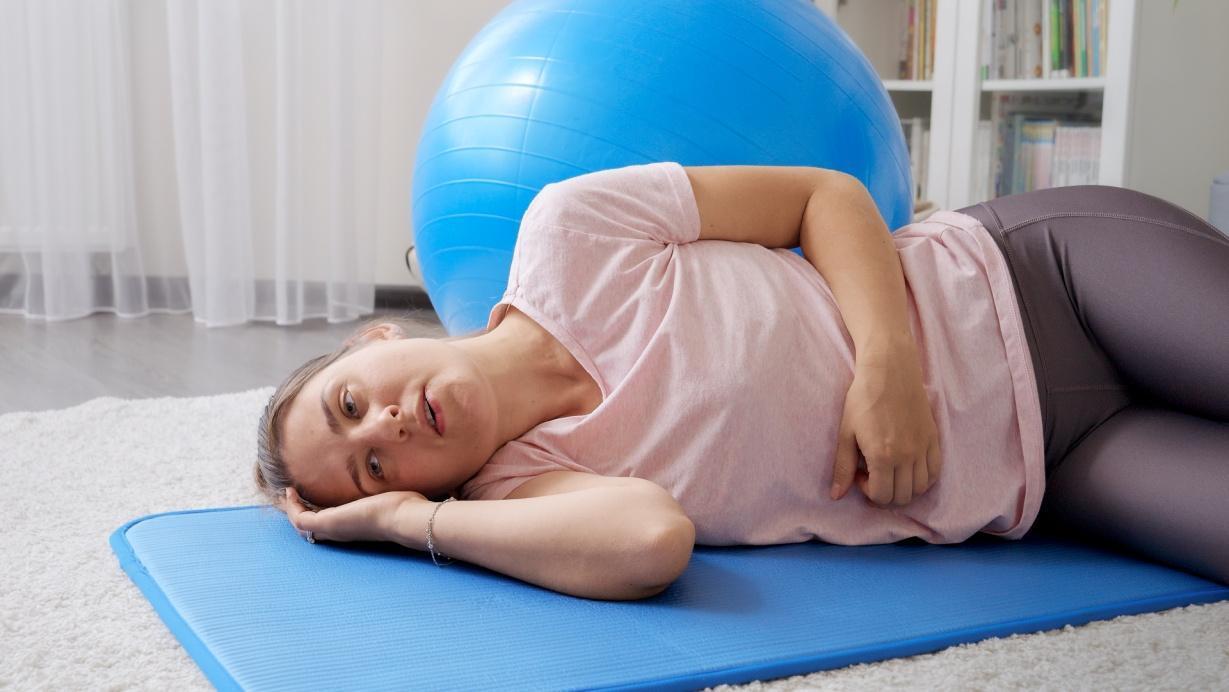
Full-body posture alignment diagram illustrating the kinetic chain connections
between the cervical spine, diaphragm, and pelvic floor.
Occasionally, neck pain persists despite targeted local treatment. This often happens because the underlying mechanical driver isn’t located where the pain is felt. Evaluating the neck in isolation can miss the true source of postural tension.
Posture: an interconnected chain from head to pelvis
The human body does not operate as a set of independent segments. The position of the head dictates shoulder alignment, which influences the curvature of the thoracic spine, which ultimately alters pelvic tilt. When an imbalance occurs at one point along the kinetic chain, other regions compensate – and it is often the most overworked link in the chain that becomes painful.
“Tech Neck” and disrupted breathing mechanics
Forward head posture – commonly referred to as “tech neck” or “text neck” – develops from prolonged hours spent slouched over screens and mobile devices.
- Increased cervical load: For every inch the head moves forward, the relative workload on the posterior neck muscles doubles.
- Thoracic compression: This forward translation pulls the shoulders into protraction and compresses the ribcage, restricting full costal expansion.
- Apical breathing pattern: As rib mobility decreases, breathing shifts from deep abdominal mechanics to shallow, upper-chest (apical) breathing, overworking secondary respiratory muscles in the neck (scalenes and sternocleidomastoid) and compounding cervical strain.
The diaphragm: the mechanical bridge between neck and pelvis
The respiratory diaphragm is the primary muscle of breathing, working in direct synergy with the deep core and the pelvic floor to regulate intra-abdominal pressure (IAP).
During normal diaphragmatic inhalation:
- The diaphragm contracts and descends into the abdominal cavity.
- The pelvic floor gently lengthens and descends to accommodate intra-abdominal pressure.
- On exhalation, the diaphragm and pelvic floor naturally recoil upward together.
When posture and upper respiratory mechanics are compromised by forward head posture, this dynamic pressure regulation fails, creating compensation patterns down the line.
Concurrent neck and pelvic tension
Chronic tension in the neck and shoulders frequently coexists with pelvic hypertonicity and lower back stiffness. Individuals who practice shallow thoracic breathing, chronically grip their abdominal muscles, and maintain a forward head posture often experience simultaneous neck stiffness, lumbar discomfort, and pelvic floor dysfunction.
The value of a global postural evaluation
This interconnected relationship highlights the importance of a comprehensive global postural assessment in physiotherapy.
Rather than focusing strictly on the symptomatic area, a physical therapist evaluates head alignment, shoulder position, thoracic mobility, pelvic tilt, and respiratory patterns. By treating the root mechanical breakdown across the entire kinetic chain, long-term relief is achieved.
For patients experiencing co-occurring pelvic health issues – such as stress urinary incontinence, pelvic organ prolapse, or chronic pelvic pain – combining postural therapy with a specialized pelvic floor rehabilitation assessment provides the most thorough, lasting outcome.
When should you see a physical therapist for neck pain?
Most cases of neck pain are benign and resolve with proper care. However, certain warning signs indicate that you should seek a professional clinical assessment rather than adopting a “wait-and-see” approach:
- Persistent pain: Discomfort that lasts more than a few days despite adequate rest, gentle movement, and workplace ergonomic adjustments.
- Radiating symptoms: Pain shooting down into the shoulder, arm, or hand, particularly when accompanied by numbness, tingling, or muscle weakness (cervical radiculopathy).
- Cervicogenic headaches: Recurrent headaches that originate at the base of the skull or top of the neck and radiate forward behind the eyes or temples.
- Post-traumatic onset: Pain developing following a car accident, fall, or sports-related impact – even if initial symptoms seem mild.
Critical “Red Flag” Symptoms Requiring Immediate Medical Attention
Certain neurological and systemic symptoms require immediate emergency medical evaluation. Consult a physician right away if your neck pain is accompanied by:
- Sudden loss of balance, dizziness, or gait lack of coordination
- Progressive weakness in the arms, hands, or legs
- High fever, severe neck rigidity (inability to touch chin to chest), and acute, blinding headache (potential signs of meningitis)
- Sudden bowel or bladder dysfunction
In all other cases, seeking early physical therapy care prevents acute neck strain from evolving into persistent, chronic pain. Our registered physical therapists conduct comprehensive global postural assessments to design targeted treatment plans right from the onset of your symptoms.
Frequently Asked Questions
Can neck pain go away on its own without treatment?
Mild, acute neck pain resulting from minor strain may resolve on its own within a few days with rest and simple posture adjustments. However, neck pain that persists beyond a few weeks – or is accompanied by radiating numbness, tingling, or headaches – requires professional evaluation to prevent it from becoming chronic. Physical therapy identifies the root mechanical breakdown and accelerates recovery.
How many physical therapy sessions are needed to treat neck pain?
The duration of treatment depends on the underlying cause, severity, and chronicity of your symptoms:
- Acute strain / mild mechanical neck pain: Often shows significant improvement within 3 to 6 sessions.
- Chronic conditions or nerve compression: May require a dedicated treatment plan spanning several weeks.
- Home exercise compliance: Consistently performing your prescribed home mobility and postural exercises directly influences your recovery speed.
Is the connection between the neck and the pelvic floor clinically valid?
Yes, this connection is well-supported by postural biomechanics and respiratory anatomy. Forward head posture disrupts natural diaphragmatic movement, which alters intra-abdominal pressure regulation and impacts pelvic floor mechanics. While not every neck pain case involves pelvic dysfunction, a global postural evaluation ensures the true root cause is identified across the entire kinetic chain.
Is physical therapy for neck pain painful?
No. Treatment interventions aim to reduce pain and restore joint mobility rather than cause distress:
- Temporary discomfort: Certain targeted mobilizations or stretches may cause mild, temporary soreness during initial sessions as restricted tissues adapt.
- Patient-centered control: Your physical therapist continuously monitors your tolerance and adjusts manual pressure and exercise intensity accordingly.
- Gradual progression: Care advances systematically to keep treatments comfortable and effective.
Can I keep working while receiving physical therapy for neck pain?
In the vast majority of cases, yes – continuing to work is encouraged alongside appropriate clinical adjustments:
- Ergonomic modifications: Your therapist will recommend specific adjustments for your computer monitor height, desk setup, keyboard positioning, and seating posture.
- Movement breaks: Integrating short postural reset breaks throughout the workday relieves continuous static muscle loading.
- Gradual activity return: Your rehabilitation plan provides clear guidance on modifying heavy lifting or strenuous tasks while your neck heals.
Author
-
We are physiotherapists passionate about movement and rehabilitation, with a clear goal: helping people better understand their pain and return to an active, unrestricted life.
Through our practice and content, we share practical, science-based approaches to prevent injuries, relieve pain, and sustainably improve mobility. We believe that well-informed patients make better decisions and achieve better outcomes.

Richard Bouzaglou, B.Sc. PT
Physiotherapist | Co-Founder
An experienced professional, Richard is the co-founder of the AMS Medical and Rehabilitation Center, where he has played a key role since 2008. With a background in sports medicine and physiotherapy, he has developed strong clinical expertise, particularly working with elite athletes.
His practice is based on a comprehensive approach that integrates advanced manual therapy, functional rehabilitation, and personalized care. Committed to continuous education and mentoring students, he is known for his clinical rigor and his ability to build lasting, trust-based relationships with his patients.

Moshe Vazana
Physiotherapist
With over 15 years of experience, Moshe is recognized for his precise, evidence-based approach. A physiotherapy graduate with advanced training in several methodologies, including the McKenzie Method (MDT) and the Mulligan Concept, he specializes in treating musculoskeletal and spinal conditions.
His international background and commitment to excellence enable him to provide care that is tailored, effective, and sustainable. Passionate about knowledge sharing, he is also actively involved in training the next generation of physiotherapy professionals.
Recent Comments