

Key takeaways: Cervicalgia, often resulting from postural tension or trauma, directly affects mobility and daily life. A personalized therapeutic approach combining manual therapy and muscle strengthening ensures optimal functional recovery while preventing chronic pain. Adopting ergonomic habits completes this care strategy. To benefit from expert support, visit our renowned physiotherapy clinic.
Is persistent neck pain limiting your ability to carry out everyday tasks? Identifying the origin of cervicalgia is the essential first step toward functional recovery. Here you will find proven care strategies and postural adjustments to provide long-lasting relief from tension.
1- Understanding cervicalgia: more than just a simple neck pain
2- At the root of the problem: the many faces of cervicalgia
3- When pain travels: radiating pain and cervicogenic headaches
4- Getting out of pain: tailored therapeutic approaches
5- Acting in prevention: habits to adopt in daily life
Understanding Cervicalgia: More Than Just a Simple Neck Pain
Definition: putting a name to the pain
Cervicalgia refers to localized pain in the neck and nape area. It is not just temporary discomfort but a common public health issue. It directly affects your cervical vertebrae.
A distinction must be made between common cervicalgia, which is often mechanical in nature, and torticollis, which is an acute muscle spasm. The acute form appears suddenly and lasts a few days to a few weeks. If the pain persists beyond three months, it becomes chronic.
This pain significantly impacts your daily life. Your quality of life is directly affected.
Symptoms that don’t lie
Pain is often just the tip of the iceberg. Other bodily signals should alert you quickly, as they help better identify the exact origin of the problem.
The most common symptoms include:
- Neck stiffness: a feeling of blockage and reduced mobility.
- Headaches: often described as pain starting at the base of the neck and radiating upward behind the head.
- Radiating pain: pain that spreads to the shoulders, upper back, and sometimes the arms.
- Numbness or tingling: abnormal sensations in the arms or hands, indicating possible nerve irritation.
- Muscle tenderness: neck and shoulder muscles are painful to the touch.
A quick overview of cervical spine anatomy
The cervical spine consists of 7 cervical vertebrae, numbered C1 through C7. These bony structures support the weight of your head. They also protect the spinal cord, a vital channel.
Intervertebral discs act as essential shock absorbers. Muscles and ligaments then provide all movement and stability.
At the Root of the Problem: The Many Faces of Cervicalgia
Poor postural habits and the infamous “text neck”
Our bodies do not tolerate immobility well. Yet we often force unnatural static positions on them at work. Prolonged poor posture, exacerbated by a sedentary lifestyle, is the primary cause of neck pain.
“Text neck” is a true modern-day scourge. Simply tilting your head to look at a screen dramatically increases the mechanical load on your neck, as illustrated by the following data:
The impact of head angle on your neck
| Head tilt angle | Approximate load on the cervical spine |
|---|---|
| 0° (Neutral position) | ~5 kg |
| 15° | ~12 kg |
| 30° | ~18 kg |
| 45° | ~22 kg |
| 60° | ~27 kg |
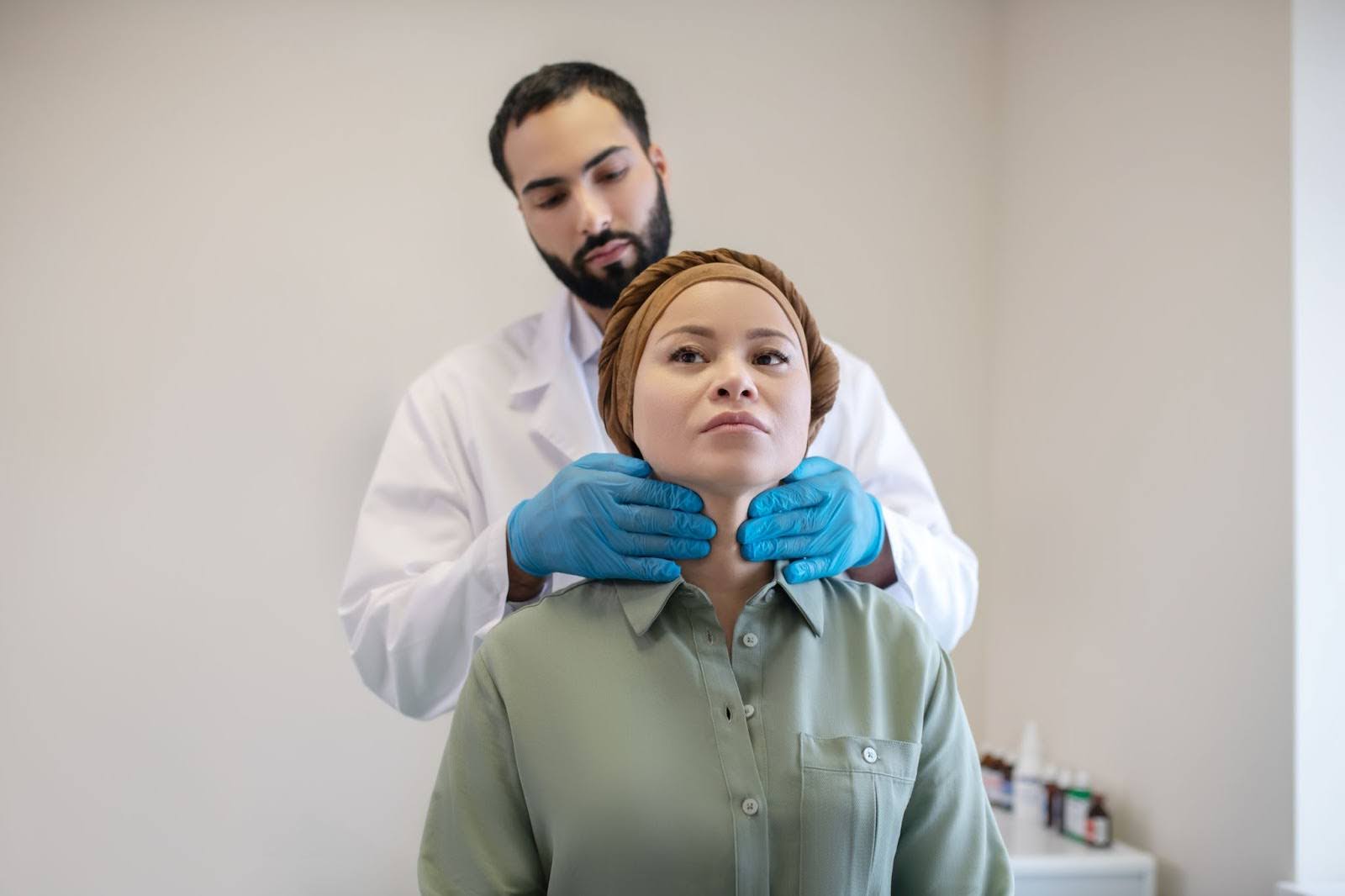
Wear and Tear and Tension: When Osteoarthritis and Stress Come Into Play
Sometimes, it is simply the mechanics that wear out. Cervical osteoarthritis, or cervicarthrosis, results from the natural age-related degeneration of the joints. This is a common reality, particularly multilevel uncovertebral osteoarthritis, which gradually restricts mobility.
But physical factors are not the only cause. Stress and anxiety play a driving role by triggering involuntary muscle tension. Your muscles tighten, creating a vicious cycle of pain that is difficult to break.
Trauma: From “Whiplash” to Sports Injuries
Traumatic causes occur suddenly. The well-known “whiplash,” common in car accidents, causes a cervical sprain due to a violent movement. Reassuringly, recovery is favorable in around 50% of cases.
Other incidents, such as falls or direct impacts during sports injuries, can also damage the delicate structures of your neck.
When Pain Travels: Radiating Pain and Cervicogenic Headaches
Cervicalgia does not always remain confined to the neck. Understanding how and why pain spreads is a key step.
Cervicobrachial Neuralgia: Pain That Travels Down the Arm
Cervicobrachial neuralgia is often referred to as “arm sciatica,” and not without reason. It is essentially the result of compression or significant irritation of a nerve root in the neck.
The pain pattern is unfortunately highly characteristic: it starts in the neck and radiates to the shoulder, then down the arm and forearm, and may reach the fingertips.
This radiating pain is often accompanied by unpleasant sensations such as tingling, numbness, or a noticeable loss of strength.
Cervicogenic Headaches: A Headache That Comes From the Neck
Not all headaches are migraines. Cervicogenic headache is pain felt in the head whose true source lies in the cervical spine.
This is the mechanism of referred pain. Irritation of the joints or nerves in the upper neck, such as the greater occipital nerve (Arnold’s nerve), may present as pain at the back of the skull, on one side of the head, or even behind the eye.
Treating neck issues often helps resolve recurrent headaches.
Getting Out of Pain: Tailored Therapeutic Approaches
Why a Professional Diagnosis Is Essential
Google is not a doctor. Relying on a rough self-diagnosis means taking an unnecessary risk with your health. The top priority remains an evaluation by a physiotherapist or physician to obtain an accurate diagnosis and identify the true cause.
When should you be concerned? Certain signs should not be ignored. Imaging is not automatic, as recommended by health authorities. Seek urgent medical attention if you notice these red flags:
- Severe and persistent pain after a trauma.
- Progressive weakness, numbness, or clumsiness in the arms or legs.
- Fever, chills, or unexplained weight loss.
- The onset of bladder or bowel control problems.
Physiotherapy: Your Best Ally
Forget “one-size-fits-all” solutions. For most common cases of cervicalgia, physiotherapy is the gold-standard treatment. The approach must be fully individualized, tailored to your history and your specific functional recovery needs.
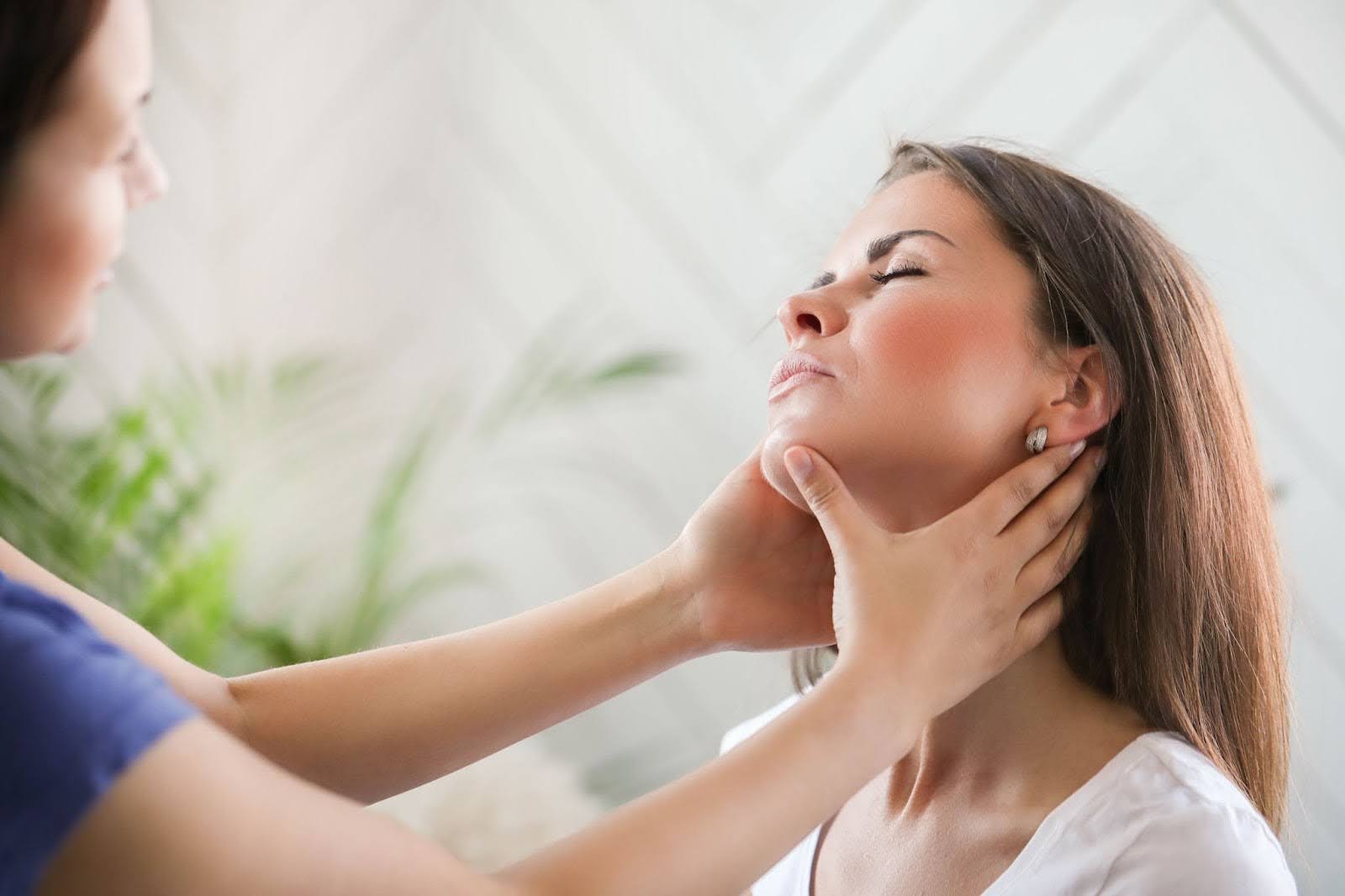
So how does it work in practice? The practitioner uses therapeutic movements, manual therapy, massage, and stretching to mobilize joints and release muscle tension. It is also essential to explore different treatment options for cervicalgia, including education about your condition.
Strengthening and Stabilization Exercises
Your recovery does not happen only in the clinic. You play an active role in regaining your abilities. Your physiotherapist will design specific exercises to be incorporated daily into your home routine.
The goal is clear: to strengthen the deep neck muscles and the shoulder girdle. This is the only way to achieve long-term stabilization of the cervical region and effectively prevent painful recurrences.
Acting in Prevention: Habits to Adopt in Daily Life
The best treatment is prevention. A few adjustments to your everyday routine can significantly improve your comfort.
Workplace Ergonomics: Simple Adjustments
A poorly adapted environment is a risk factor for musculoskeletal disorders (MSDs). This is a major workplace prevention issue that should not be overlooked.
To protect your neck, consider these practical adjustments:
- Position your screen at eye level to keep your head upright.
- Use a chair with good lumbar support and armrests.
- Keep your feet flat on the floor.
- Take regular breaks every 30 to 45 minutes to move around.
The Importance of Sleep: Choosing the Right Pillow
We spend one-third of our lives sleeping. Poor nighttime posture can undo all the postural efforts made during the day.
Invest in a suitable pillow that maintains proper cervical alignment, such as a Pillowise pillow. Above all, avoid sleeping on your stomach, a position that forces prolonged and harmful neck rotation.
Moving to Protect Your Neck: Gentle Physical Activity
Immobility is the enemy of your spine. Moderate physical activity remains the most effective way to maintain the health of your muscles and joints.
Opt for walking, swimming, or yoga. These activities promote mobility without unnecessarily overloading your neck.
Regaining full neck mobility requires a comprehensive approach. Whether through physiotherapy, ergonomics, or targeted exercises, there are solutions to provide long-lasting pain relief. Care provided by a qualified team helps ensure a safe recovery and allows you to return to daily activities with confidence.
Author
-
We are physiotherapists passionate about movement and rehabilitation, with a clear goal: helping people better understand their pain and return to an active, unrestricted life.
Through our practice and content, we share practical, science-based approaches to prevent injuries, relieve pain, and sustainably improve mobility. We believe that well-informed patients make better decisions and achieve better outcomes.

Richard Bouzaglou, B.Sc. PT
Physiotherapist | Co-Founder
An experienced professional, Richard is the co-founder of the AMS Medical and Rehabilitation Center, where he has played a key role since 2008. With a background in sports medicine and physiotherapy, he has developed strong clinical expertise, particularly working with elite athletes.
His practice is based on a comprehensive approach that integrates advanced manual therapy, functional rehabilitation, and personalized care. Committed to continuous education and mentoring students, he is known for his clinical rigor and his ability to build lasting, trust-based relationships with his patients.

Moshe Vazana
Physiotherapist
With over 15 years of experience, Moshe is recognized for his precise, evidence-based approach. A physiotherapy graduate with advanced training in several methodologies, including the McKenzie Method (MDT) and the Mulligan Concept, he specializes in treating musculoskeletal and spinal conditions.
His international background and commitment to excellence enable him to provide care that is tailored, effective, and sustainable. Passionate about knowledge sharing, he is also actively involved in training the next generation of physiotherapy professionals.
Recent Comments