
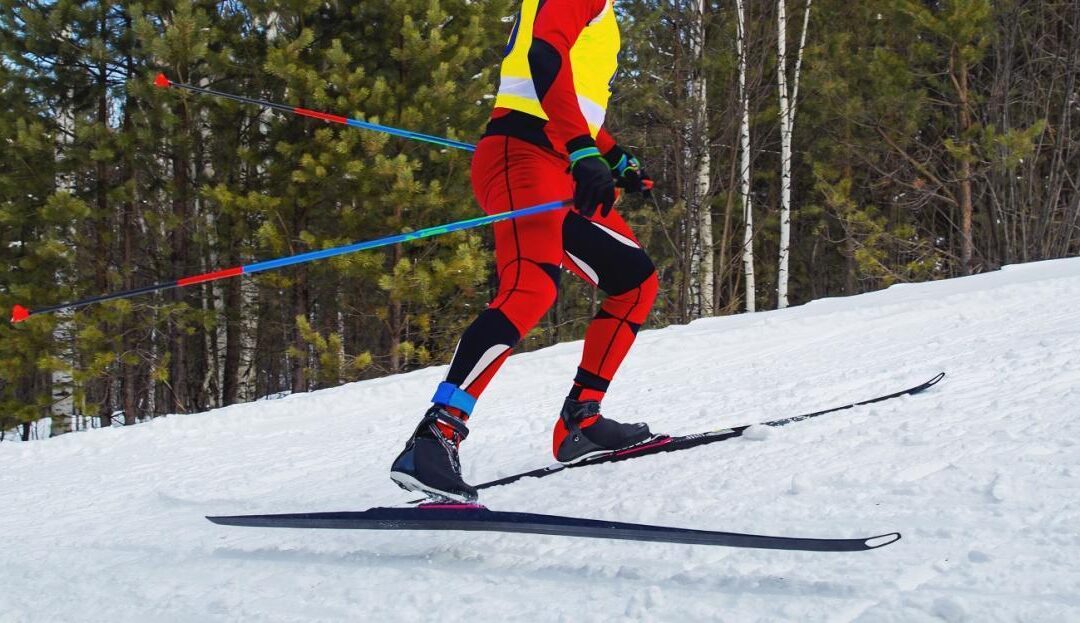
Skiing is among the sports with the highest incidence of knee ligament injuries, particularly tears to the anterior cruciate ligament (ACL) and medial collateral ligament (MCL). However, a significant portion of these injuries can be prevented – or at least made far less likely – through targeted physical conditioning before taking your first run of the season.
After months away from the slopes, the key muscles, stabilizing joints, and neuromuscular reflexes required for skiing lose their conditioning. Pre-season is the ideal time to reawaken those movement patterns.
A well-structured pre-ski conditioning program helps:
- Strengthen the primary muscle groups that dynamically stabilize and protect knee ligaments
- Enhance proprioception and neuromuscular control on uneven, high-speed, and variable snow terrain
- Reduce fall risk caused by early-onset muscle fatigue during long ski runs
- Identify underlying joint instability or biomechanical imbalances before hitting the mountain
- Prepare the kinetic chain for the unique eccentric and isometric demands of alpine skiing, which differ significantly from typical summer sports
Why does skiing place so much strain on knee ligaments?
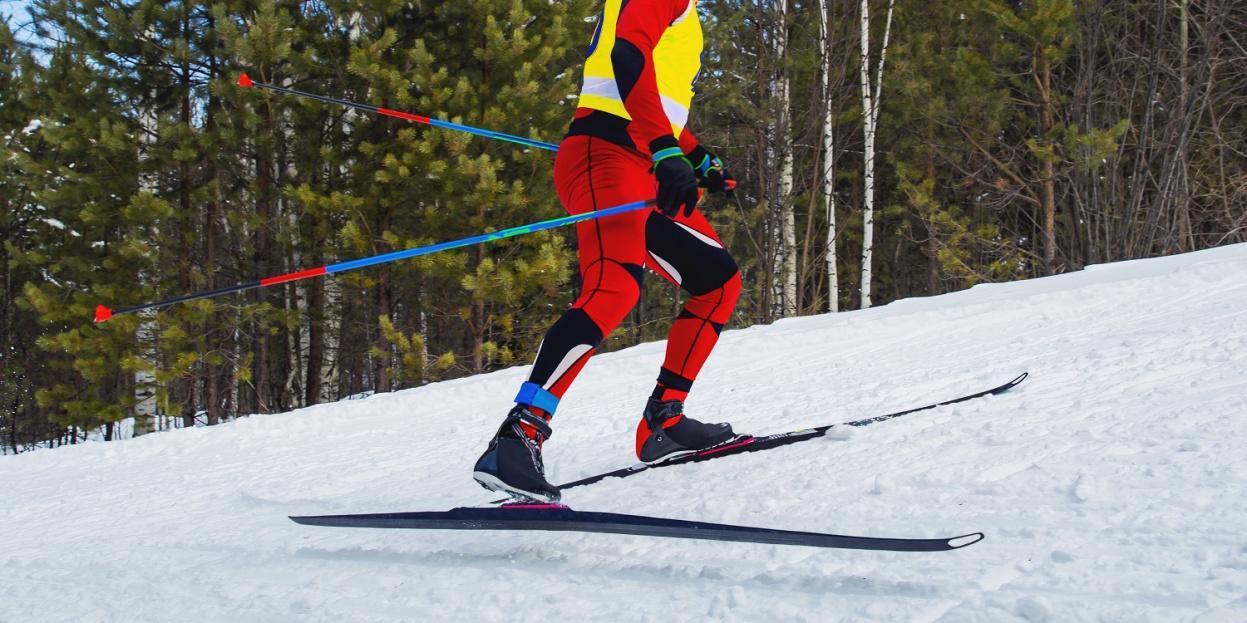
Alpine skier
The knee joint sits at the center of nearly every movement in alpine skiing. It absorbs terrain shocks, holds edge angles through turns, and cushions landings – all while the foot is rigidly attached to a long lever arm: the ski itself. Consequently, knee sprains and ligament tears account for approximately one-third of all alpine skiing injuries, making them the most common injury on the slopes.
Rotation and axial loading: a high-risk combination
The anterior cruciate ligament (ACL) prevents the tibia (shinbone) from sliding forward relative to the femur (thighbone) and controls rotational stability.
The ACL becomes exceptionally vulnerable when rotational torque is applied while the knee is bearing body weight. In skiing, this dangerous combination occurs frequently during:
- A poorly initiated turn or caught edge
- A ski veering outward while momentum carries the torso in the opposite direction
- Awkward landings off terrain features or moguls
Twisting falls (Valgus-external rotation mechanics)
Twisting falls are the primary cause of major ligament tears in alpine skiing. When a skier loses balance backward or laterally, the ski edge often remains hooked in the snowpack, delivering a violent rotational force to the flexed knee joint.
Because these mechanics occur within milliseconds – far faster than conscious muscular reaction – neuromuscular reflexes and active dynamic muscular support must be pre-conditioned to protect the joint automatically.
Late-afternoon fatigue and “back-seat” posture
A significant percentage of knee injuries occur during the final runs of the day. As muscular endurance wanes:
- Slower reflexes: Dynamic muscle stabilizers fail to react quickly enough to terrain variations.
- “Back-seat” postural collapse: Tired skiers tend to shift their center of mass backward, flexing the knees and hips excessively.
- Increased ACL Vulnerability: Sitting “in the back seat” transfers immense tensile force directly onto the ACL, especially when attempting to turn or recover balance.
Building muscle endurance ensures proper technique late in the day. Taking timely rest breaks and listening to body fatigue are equally critical preventive strategies.
Equipment setup: DIN settings matter
Ill-adjusted, overly tight, or incorrectly calibrated ski bindings fail to release during a fall. When bindings fail to pop out, the ski acts as a rigid mechanical lever, transferring 100% of the rotational torque directly into the knee joint.
Having your bindings inspected and professionally calibrated by a certified ski technician at the start of each season – based on your height, weight, boot sole length, age, and skier type (DIN setting) – is an essential pre-season safety step.
Priority muscle groups to strengthen before ski season
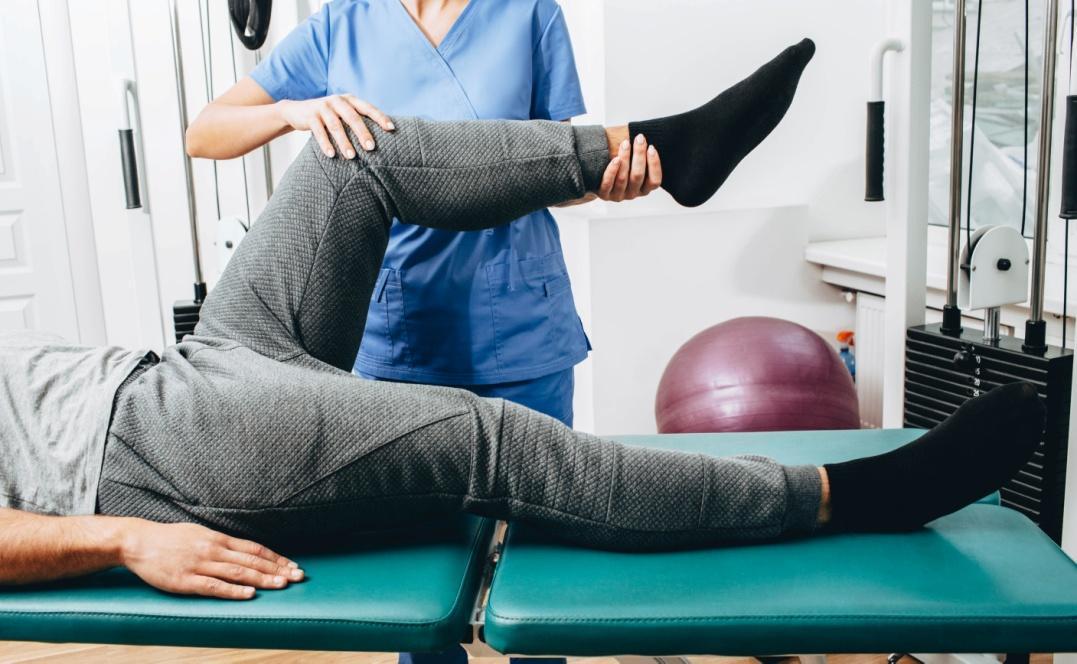
Physical therapy patient performing pre-ski leg strengthening exercises with targeted knee stability cues.
Muscles represent your ligaments’ first line of defense. The stronger and more resilient your lower body musculature, the better it dynamically stabilizes the knee joint and absorbs ground reaction forces before they reach the joint capsule.
Quadriceps and hamstrings: protecting the ACL
The quadriceps sustain the highest workload in alpine skiing, holding an isometric flexed stance for minutes at a time while absorbing continuous eccentric impacts from bumps and terrain changes.
The hamstrings, located along the back of the thigh, act as crucial functional synergists to the ACL. By pulling the tibia backward relative to the femur, strong hamstrings directly counteract the anterior shear forces that tear the ACL.
Key pre-season exercises include:
- Barbell or goblet squats
- Reverse and walking lunges
- Single-leg glute bridges
- Romanian deadlifts (RDLs)
Hip stabilizers: preventing knee valgus
Often overlooked in basic ski prep, the gluteal muscles – specifically the gluteus medius – control dynamic leg alignment. When the hips lack force production and endurance, the knee collapses inward (dynamic knee valgus), significantly elevating strain on both the ACL and MCL.
Targeted exercises include:
- Lateral band walks (monster walks)
- Clamshells with resistance bands
- Single-leg deadlifts and single-leg bridges
Calves and ankle mobility
Even when encased in rigid ski boots, the foot and ankle complex plays an active role in balance, edge pressure distribution, and shock absorption. Strong calf muscles (gastrocnemius and soleus) help manage forward lean inside the boot and cushion terrain irregularities.
Simple conditioning includes:
- Two-leg and single-leg calf raises
- Eccentric heel drops off a step platform
Restoring the quad-to-hamstring (H:Q) ratio
Alpine skiing naturally over-develops the quadriceps relative to the hamstrings. A pronounced strength imbalance (low Hamstring-to-Quadriceps ratio) compromises ACL protection during high-speed turns.
A well-balanced physical therapy dryland program prioritizes posterior chain strengthening – not just squat variations – to ensure optimal muscle co-contraction around the knee.
Building muscular endurance for long runs
Downhill skiing demands continuous muscular tension over several consecutive minutes. Beyond absolute maximum strength, pre-season training must emphasize isometric and eccentric endurance:
- Wall sits: Holding a
 flexed ski stance position.
- Tuck holds: Holding static squat positions for 45 to 60 seconds.
- High-repetition sets: Modest resistance with higher volume to mirror slope demands.
Aiming for 2 to 3 targeted sessions per week, with progressive overload in volume and duration, provides a rock-solid foundation for most recreational skiers.
Proprioception: the underrated key to knee protection
Strength alone is insufficient if your muscles cannot react quickly enough to unpredictable terrain. This is where proprioception and neuromuscular control play a vital, often overlooked role in pre-ski dryland conditioning.
Rapid reaction to sudden imbalances
Proprioception is the body’s subconscious ability to sense joint position, movement, and spatial orientation. Sensory receptors located within knee ligaments, tendons, and muscle spindles continuously send feedback to the central nervous system, which adjusts muscle tension within milliseconds to stabilize the joint.
On variable snowpack, icy patches, or sudden mogul drops, this rapid reflex arc determines whether a joint absorbs an impact safely or suffers a traumatic ligament tear.
Proprioceptive training on unstable surfaces
Neuromuscular control is trained by exposing the lower body to controlled instability:
- Static unilateral balance: Progressing from single-leg stance on a flat surface to an unstable surface (BOSU ball, foam balance pad, or balance board).
- Visual & sensory perturbations: Closing the eyes or performing upper-body multi-tasking while maintaining single-leg stability.
- Dynamic plyometrics & deceleration: Single-leg landings with precise knee-alignment control, lateral bounds, and rapid direction changes to simulate high-speed turn corrections.
Superior control means fewer twisting injuries
A knee with sharp neuromuscular control stabilizes automatically the moment an edge catches or a fall begins. Clinical research demonstrates that pre-season injury prevention programs combining dynamic strengthening with proprioceptive retraining significantly decrease the incidence of non-contact ACL tears in high-risk pivoting sports.
Progressive integration before the first run
Proprioceptive drills should be introduced systematically 6 to 8 weeks before heading to the mountain:
- Initial phase: Dedicate 5 to 10 minutes at the start or end of your workout to static balance and foam pad exercises.
- Advanced phase: Progress to dynamic single-leg jumps, reactive balance drills, and sport-specific plyometrics as balance improves.
The goal is to step onto the slopes with sharp, pre-conditioned stabilization reflexes ready for day one.
Pre-season physical evaluation: who benefits most?
Generic dryland workouts found online work well for many recreational skiers, but they do not suit everyone. In several specific clinical scenarios, a comprehensive pre-season physical evaluation is a crucial step to protect your knee joints before your first descent.
Prior ligament injuries or reconstruction
A previous knee sprain, partial tear, or full ACL reconstruction – even if surgically repaired and rehabilitated years ago – statistically increases the risk of re-injury. A targeted clinical evaluation verifies whether limb symmetry, quad/hamstring strength ratios, and neuromuscular control have truly recovered to withstand the mechanical demands of alpine skiing.
Residual knee instability
A knee joint that occasionally “gives way,” feels unreliable on stairs, or swells following physical exertion is sending clear warning signs. Addressing these mechanical deficits before buckling into ski boots prevents acute ligament damage on the slopes.
Returning to the mountain after long inactivity
Skiers returning to the slopes after several seasons away, or following a sedentary period, benefit immensely from an objective assessment of their functional capacity. Relying on muscle memory rather than actual physical conditioning – and pushing too hard during early-season runs without an adequate strength base – significantly elevates injury risk.
Personalized sports medicine strategy
An evaluation through our sports medicine service provides an individualized conditioning program tailored to your fitness level, injury history, and seasonal goals. For patients presenting with diagnosed structural instability, a custom sports knee brace (orthosis) may be recommended as an adjuvant protection alongside targeted muscular strengthening.
Our registered physical therapy team evaluates your biomechanics, identifies baseline deficits, and prescribes a personalized pre-ski preparation routine so you can hit the powder with total confidence.
Frequently Asked Questions
How far in advance should I start pre-ski conditioning?
Ideally, you should begin your dryland conditioning 4 to 6 weeks before your first day on the slopes. This timeframe allows for progressive muscular overload and measurable improvements in neuromuscular proprioception without rushing. Starting a prep routine just a week or two before skiing does not provide enough time to adapt structural tissues or build protective dynamic joint stability.
Can pre-season conditioning truly prevent an ACL tear?
While no program can completely eliminate injury risk, pre-ski conditioning significantly lowers the probability and severity of non-contact ACL tears:
- Dynamic joint stability: Stronger quadriceps, hamstrings, and glutes actively absorb rotational torques and ground impact forces.
- Rapid neuromuscular reflexes: Sharpened proprioception enables millisecond muscle co-contractions to stabilize the joint during a loss of balance.
- Uncontrollable factors: External elements such as sudden equipment failure, collision, or icy snow conditions remain outside the scope of physical conditioning.
I sprained my knee a few years ago. Should I get a clinical evaluation before skiing?
Yes, getting evaluated by a physical therapist is a wise precaution – especially if you experience occasional joint stiffness, aching, or a sensation that the knee is “unreliable.” An incompletely rehabilitated ligament injury often leaves subtle strength asymmetries or delayed muscle firing patterns that increase the risk of re-injury on the mountain.
Are home exercises enough, or should I see a physical therapist?
It depends on your injury history and current baseline fitness:
- Healthy skiers without prior injuries: A well-structured home dryland program featuring squats, lunges, balance pads, and plyometrics is generally sufficient.
- Skiers with prior injuries or joint instability: A personalized assessment and tailored clinical program are strongly recommended to address specific mechanical deficits.
- Movement quality: A physical therapist ensures correct exercise execution and biomechanical alignment, directly maximizing training efficiency.
Does wearing a knee brace replace the need for pre-ski muscle conditioning?
No. Functional knee braces and active muscular conditioning are complementary, not interchangeable strategies. While a functional sports brace provides external passive mechanical support – particularly beneficial for individuals with diagnosed structural instability – it cannot replace dynamic muscular strength, power, or neuromuscular reflex protection.
Author
-
We are physiotherapists passionate about movement and rehabilitation, with a clear goal: helping people better understand their pain and return to an active, unrestricted life.
Through our practice and content, we share practical, science-based approaches to prevent injuries, relieve pain, and sustainably improve mobility. We believe that well-informed patients make better decisions and achieve better outcomes.

Richard Bouzaglou, B.Sc. PT
Physiotherapist | Co-Founder
An experienced professional, Richard is the co-founder of the AMS Medical and Rehabilitation Center, where he has played a key role since 2008. With a background in sports medicine and physiotherapy, he has developed strong clinical expertise, particularly working with elite athletes.
His practice is based on a comprehensive approach that integrates advanced manual therapy, functional rehabilitation, and personalized care. Committed to continuous education and mentoring students, he is known for his clinical rigor and his ability to build lasting, trust-based relationships with his patients.

Moshe Vazana
Physiotherapist
With over 15 years of experience, Moshe is recognized for his precise, evidence-based approach. A physiotherapy graduate with advanced training in several methodologies, including the McKenzie Method (MDT) and the Mulligan Concept, he specializes in treating musculoskeletal and spinal conditions.
His international background and commitment to excellence enable him to provide care that is tailored, effective, and sustainable. Passionate about knowledge sharing, he is also actively involved in training the next generation of physiotherapy professionals.
Recent Comments