
Which Treatment Approach Is Most Effective for Persistent Sciatica?
Persistent sciatica does not have to be permanent. When pain has been radiating down the leg for several weeks, physiotherapy offers targeted approaches that address the actual cause of the problem rather than only the symptom.
Physiotherapy can help:
- identify the precise cause of sciatic nerve compression or irritation;
- reduce inflammation and radiating pain;
- restore nerve and joint mobility;
- strengthen the structures that support the spine and pelvis;
- prevent recurrence through comprehensive functional rehabilitation.
Persistent Sciatica: Understanding Why the Pain Lasts
Acute sciatica often resolves on its own within a few days or weeks. Sciatica is considered persistent when radiating leg pain continues for more than six weeks despite rest or the use of anti-inflammatory medication.
Several factors may explain why the pain persists:
- a herniated disc that continues to place pressure on the nerve root;
- spinal stenosis, which is a narrowing of the spinal canal that compresses the nerves;
- piriformis syndrome, in which this deep gluteal muscle irritates the sciatic nerve as it exits the pelvis;
- sacroiliac instability that repeatedly places tension on nearby nerve structures.
Beyond the mechanical cause, the nervous system itself can play a role in maintaining the pain. When a nerve remains irritated for an extended period, it may become sensitized and continue sending pain signals even when there is no longer active compression.
This is known as central sensitization. The pain may then become more widespread, more constant, and less predictable.
Persistent radiating pain is a clear warning sign. The nerve remains under tension or compression. This is why an accurate diagnosis, established by a physiotherapist during a complete assessment, is essential before choosing a treatment approach.
Nerve Mobilization: Releasing Tension on the Sciatic Nerve

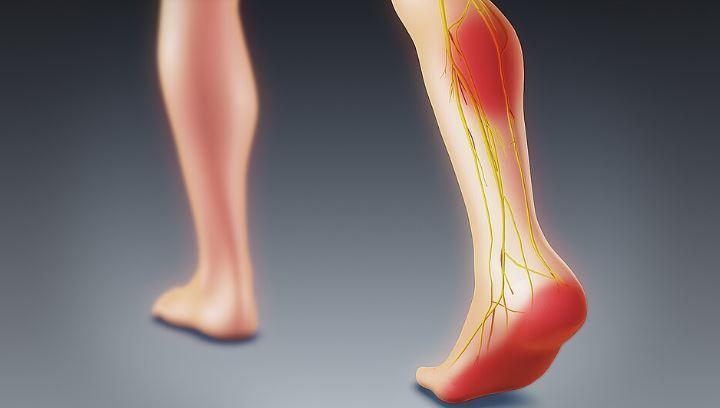
The sciatic nerve travels a long distance from the lower back to the foot. Along this path, it can develop adhesions within its surrounding tissues or lose its ability to glide freely, which can maintain irritation and radiating pain.
Neuromobilization is specifically designed to restore this mobility.
It includes two complementary types of treatment:
- Neural gliding exercises, also known as neural flossing: gentle, rhythmic movements that help the nerve move within its surrounding tissues, gradually reducing adhesions and irritation;
- Traction therapy for spinal decompression: a treatment that addresses the source of the problem directly by reducing pressure on the nerve root.
These techniques can gradually reduce radiating pain, with some patients noticing relief during the first few sessions.
However, the correct “dosage” is essential. A nerve that is already highly irritated may react negatively to overly intense mobilization. The physiotherapist adjusts the technique, range of motion, and number of repetitions according to the patient’s tolerance during each session.
Once the patient has learned the basic techniques in the clinic, neuromobilization exercises can be added to their daily home routine to maintain progress between appointments.
The McKenzie Method: Centralizing Pain Toward Its Source
The McKenzie Method is based on an observable and measurable phenomenon known as pain centralization.
In practical terms, certain repeated movements gradually move the pain out of the leg and back toward the lower back, where it originally began. This reduction in radiating pain is a positive sign that pressure on the nerve is decreasing.
The physiotherapist first identifies the directional movements that produce this centralization effect for the individual patient.
This is not a universal method. The most effective direction varies from person to person and must be determined through an assessment.
The McKenzie Method also places the patient at the centre of their own treatment. The exercises are performed independently and repeatedly several times per day. This active role is both a practical advantage and a demonstrated factor in treatment success.
Clinical evidence supports this method for treating herniated discs and related radiating pain. The exercises are adjusted regularly according to the patient’s individual response, allowing treatment to progress without causing unnecessary irritation.
Stabilization and Strengthening: Supporting the Spine to Reduce Pressure
A poorly supported spine is vulnerable.
When the deep core muscles—including the transverse abdominal muscle and multifidus muscles—are weak or inhibited by pain, the spinal structures absorb loads they should not have to carry. This increases pressure on the discs and nerve roots.
Strengthening in physiotherapy follows a structured progression:
- Deep stabilization: activating and strengthening the core muscles according to the patient’s initial tolerance;
- Glute strengthening: strong gluteal muscles reduce tension on the sciatic nerve in the pelvic region, which is particularly helpful in cases of piriformis syndrome;
- Correcting muscular imbalances: imbalances between the anterior and posterior muscle chains are common in people with chronic sciatica. A postural physiotherapy approach corrects these issues over the long term by rebalancing tension throughout the body.
Once basic stabilization has been achieved, the program progresses toward functional and sports-related activities, allowing for a gradual and safe return to everyday tasks.
Manual Therapy: Mobilizing the Joints and Releasing the Tissues
Manual therapy complements active exercises by directly addressing the joint and myofascial structures that limit mobility and contribute to ongoing pain.
It may include several complementary techniques:
- Mobilization of the intervertebral and sacroiliac joints: to restore segmental mobility and reduce local irritation;
- Myofascial release: focused on the gluteal muscles and piriformis, which are often very tight in cases of sciatica, to reduce deep pressure on the nerve;
- Spinal manipulation: when appropriate, this can quickly restore mobility and provide significant symptom relief;
- Deep-tissue massage: to reduce compensatory muscle tension that gradually develops around the painful area.
Manual therapy is always combined with a personalized exercise program.
When used on its own, it generally provides temporary relief. When combined with active rehabilitation, it helps maximize long-term results.
When Should You See a Physiotherapist for Persistent Sciatica?
Certain signs indicate that it is time to seek treatment without delay:
- radiating leg pain that has lasted more than four to six weeks;
- numbness, tingling, or weakness in the foot or leg;
- pain that worsens despite rest or the use of anti-inflammatory medication;
- major functional limitations affecting work, driving, or sleep;
- a diagnosis confirmed through medical imaging, allowing appropriate treatment to begin as soon as possible.
A specialized assessment helps identify the actual cause of the sciatica before the most appropriate treatment is selected.
The earlier treatment begins, the better the likely outcome.
Have you been experiencing radiating leg pain for several weeks? Book an appointment with one of our physiotherapists for a targeted assessment.
FAQ
How Long Does It Take to Recover From Persistent Sciatica?
Recovery time varies depending on the cause and severity of the nerve compression:
- sciatica caused by a herniated disc may resolve within 6 to 12 weeks with treatment;
- spinal stenosis or piriformis syndrome may require several months of rehabilitation;
- regularly completing home exercises is a major factor in the speed of recovery.
Should All Physical Activity Be Avoided With Persistent Sciatica?
No. Complete rest is rarely recommended beyond the first few days:
- light walking and gentle movement are generally beneficial;
- certain targeted exercises actively reduce nerve compression;
- the physiotherapist identifies which activities should be continued and which should be temporarily avoided.
Is There a Difference Between Sciatica and Femoral Neuralgia?
Yes. These two types of radiating leg pain do not have the same origin:
- sciatica radiates down the back of the leg and may extend to the foot;
- femoral neuralgia radiates along the front of the thigh;
- treatment varies depending on the nerve involved and the affected vertebral level.
A physiotherapy assessment can distinguish between these two clinical conditions.
Is Physiotherapy Effective When Sciatica Is Caused by Spinal Stenosis?
Yes, when the treatment approach is properly adapted:
- Positions involving forward bending of the trunk often relieve symptoms associated with spinal stenosis;
- Mobility and stabilization exercises reduce pressure within the spinal canal;
- Progress may be slower than with a herniated disc, but the results can still be significant.
Feature image from: © www.scientificanimations.com, CC BY-SA 4.0, via Wikimedia Commons

Author
-

We are physiotherapists passionate about movement and rehabilitation, with a clear goal: helping people better understand their pain and return to an active, unrestricted life.
Through our practice and content, we share practical, science-based approaches to prevent injuries, relieve pain, and sustainably improve mobility. We believe that well-informed patients make better decisions and achieve better outcomes.

Richard Bouzaglou, B.Sc. PT
Physiotherapist | Co-Founder
An experienced professional, Richard is the co-founder of the AMS Medical and Rehabilitation Center, where he has played a key role since 2008. With a background in sports medicine and physiotherapy, he has developed strong clinical expertise, particularly working with elite athletes.
His practice is based on a comprehensive approach that integrates advanced manual therapy, functional rehabilitation, and personalized care. Committed to continuous education and mentoring students, he is known for his clinical rigor and his ability to build lasting, trust-based relationships with his patients.

Moshe Vazana
Physiotherapist
With over 15 years of experience, Moshe is recognized for his precise, evidence-based approach. A physiotherapy graduate with advanced training in several methodologies, including the McKenzie Method (MDT) and the Mulligan Concept, he specializes in treating musculoskeletal and spinal conditions.
His international background and commitment to excellence enable him to provide care that is tailored, effective, and sustainable. Passionate about knowledge sharing, he is also actively involved in training the next generation of physiotherapy professionals.
Recent Comments