

Inguinal hernias are a common condition in Canada and account for a significant portion of general surgery cases. According to an analysis published in the Canadian Journal of Surgery, approximately 50,000 hernia repairs are performed each year in the country. Hernias, predominantly inguinal, affect around 3% to 4% of the population, with a strong male predominance.
In this context, non-surgical solutions play a key role in reducing discomfort and preventing worsening. Hernia underwear from AMS Clinics provides targeted support for the inguinal region and is suitable for daily use.
What Is Hernia Underwear?
This support solution is specifically designed for individuals suffering from inguinal hernias. It helps stabilize the affected area while limiting protrusion (forward bulging), thereby providing the comfort and security needed in everyday life.
Hernia underwear is particularly useful for:
- mild hernias or patients awaiting surgery,
- post-operative periods to support recovery and reduce strain on the surgical area.
This device serves a dual purpose:
- to limit the progression of the hernia by applying gentle, targeted pressure to the inguinal area,
- to provide daily comfort, allowing individuals to stay active while protecting the weakened area.
However, hernia underwear does not replace surgery when it is required.
AMS Clinics offer hernia underwear designed for everyday use, combining discretion, comfort, and effectiveness. Designed to be worn under clothing, they provide optimal support without restricting movement, allowing patients to remain comfortable and confident throughout the day.
Inguinal Hernias: Understanding the Condition to Better Manage It
An inguinal hernia occurs when part of the intestine or abdominal tissue protrudes through a weakness in the abdominal wall, typically in the groin area. A bulge may be visible or felt as a mass under the skin, especially during physical exertion or coughing.
Common Symptoms
Inguinal hernias may present with:
- discomfort or pain in the groin area,
- a feeling of heaviness or pulling,
- sometimes a visible bulge that disappears when lying down.
In some individuals, the hernia may remain painless, but daily discomfort can still impact movement and physical activities.
Risk Factors
Several factors may contribute to the development of an inguinal hernia:
- aging, as abdominal muscles and tissues lose elasticity over time,
- intense physical effort or frequent heavy lifting,
- congenital or acquired abdominal weakness, sometimes linked to prior surgery or pregnancy.
Prevention and Usage Tips for Hernia Underwear
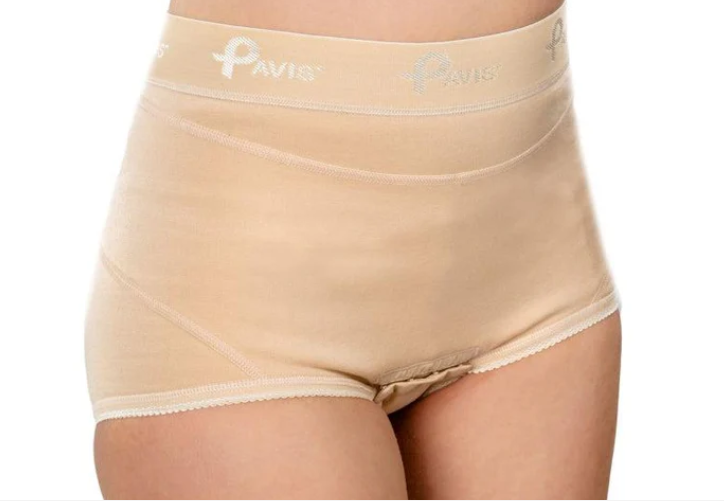
Hernia underwear should be used according to individual needs and healthcare professional recommendations.
It can be worn:
- during the day, especially during physical activities or efforts involving the abdominal region,
- while awaiting surgery, to reduce discomfort and slow progression,
- after surgery, to support the operated area and aid recovery.
For optimal comfort, it is recommended to put on the hernia underwear before starting daily activities and remove it at bedtime, unless otherwise advised by a healthcare professional.
Proper fit is also essential to ensure effectiveness and comfort:
- the underwear should conform to the inguinal area without excessive compression,
- it should remain discreet under clothing and allow full mobility.
An improper fit may reduce effectiveness and cause irritation.
To enhance protection and comfort:
- maintain proper posture, especially when standing or walking,
- limit excessive strain and only lift heavy loads when necessary
- attend regular medical follow-ups to monitor the hernia and adjust treatment if needed.
Hernia underwear is not a substitute for medical advice; it is a support device that helps manage symptoms on a daily basis. Its use should always be part of appropriate care under the supervision of a healthcare professional.
Conclusion
Inguinal hernias require appropriate management to reduce discomfort and prevent worsening. When a non-surgical approach is indicated, wearing hernia underwear is an effective supportive solution alongside medical follow-up. The models offered by AMS Clinics are designed to provide comfort, targeted support, and discretion, contributing to an improved quality of life every day.
Author
-
We are physiotherapists passionate about movement and rehabilitation, with a clear goal: helping people better understand their pain and return to an active, unrestricted life.
Through our practice and content, we share practical, science-based approaches to prevent injuries, relieve pain, and sustainably improve mobility. We believe that well-informed patients make better decisions and achieve better outcomes.

Richard Bouzaglou, B.Sc. PT
Physiotherapist | Co-Founder
An experienced professional, Richard is the co-founder of the AMS Medical and Rehabilitation Center, where he has played a key role since 2008. With a background in sports medicine and physiotherapy, he has developed strong clinical expertise, particularly working with elite athletes.
His practice is based on a comprehensive approach that integrates advanced manual therapy, functional rehabilitation, and personalized care. Committed to continuous education and mentoring students, he is known for his clinical rigor and his ability to build lasting, trust-based relationships with his patients.

Moshe Vazana
Physiotherapist
With over 15 years of experience, Moshe is recognized for his precise, evidence-based approach. A physiotherapy graduate with advanced training in several methodologies, including the McKenzie Method (MDT) and the Mulligan Concept, he specializes in treating musculoskeletal and spinal conditions.
His international background and commitment to excellence enable him to provide care that is tailored, effective, and sustainable. Passionate about knowledge sharing, he is also actively involved in training the next generation of physiotherapy professionals.
Recent Comments