
Restless leg syndrome (RLS), a sleep-depriving condition that affects over 22 million Americans, is often missed by doctors, or misdiagnosed as poor circulation, arthritis, back problems, varicose veins or even depression. However, there are certain symptoms that indicate RLS may be occurring:
- Uncomfortable feelings in the legs, such as tingling or a “creeping” sensation, and a desire to move the limbs.
- Discomfort in the evening, at night and while at rest.
- Only temporary relief from walking or stretching.
The most distinctive indication of RLS (sometimes referred to as Ekbom disease) is that lying down and trying to relax activates the symptoms. As a result, most people with RLS have difficulty falling asleep and staying asleep. The resulting sleep deprivation has a negative impact on all aspects of life, including work, daily activity and personal relationships. People with RLS are often unable to concentrate, have impaired memory and struggle to complete mundane tasks. Other conditions such as diabetes and peripheral neuropathy may contribute to RLS symptoms.
Cure for Restless Legs Syndrome
There is no known cure for RLS, but the symptoms can often be minimized and may even disappear by following a simple protocol supervised by a specially trained physical therapist. Clinical treatment for RLS in physiotherapy can include:
- Mild-to-moderate exercise: physical therapists will recommend a program of exercises that have been shown in trial studies to relieve symptoms.
- Stretching program: Stretching before bed appears to be effective at preventing some RLS episodes, but only if it’s combined with other lifestyle changes recommended by a physical therapist.
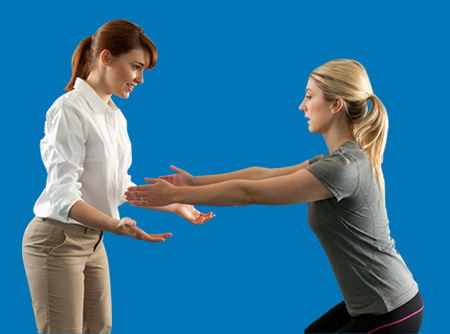
- Neuro gliding exercises: sometimes referred to as “flossing”, neuro gliding is a form of stretching that releases tension in the nerve. Physical therapists may perform this exercise in the clinic and show patients how they can do the same stretch at home.
- Relaxation exercises: relaxation techniques can relieve RLS symptoms.
- Movement pattern re-education: typically involves neuromuscular re-education of movement, balance, coordination, kinesthetic sense, posture and one’s own sitting and standing activities.
In addition to physiotherapy treatment, changes in lifestyle can help reduce the symptoms of RLS.
If you suspect you may be suffering from restless leg syndrome, contact a licensed physiotherapist for a free screening. The physiotherapist will ask you to assess your symptoms in terms of their severity (mild, moderate or severe) and their impact on your pattern of sleep, daily activities and lifestyle. After a complete assessment, the physiotherapist will be able to recommend a combination of treatment, exercises and lifestyle changes that will help you relieve your symptoms and get a good night’s rest.
Sources
Statistics and misdiagnoses
Study showing reduced symptoms after six weeks:
http://www.jabfm.org/content/19/5/487.long
Stretches to relieve RLS symptoms:
http://www.healthline.com/health/restless-leg-syndrome/exercises-to-alleviate-rls#2
http://www.ncbi.nlm.nih.gov/pmc/articles/PMC2671772/?tool=pmcentrez
Definition of movement re-education:
https://www.webpt.com/cpt-codes
Author
-
We are physiotherapists passionate about movement and rehabilitation, with a clear goal: helping people better understand their pain and return to an active, unrestricted life.
Through our practice and content, we share practical, science-based approaches to prevent injuries, relieve pain, and sustainably improve mobility. We believe that well-informed patients make better decisions and achieve better outcomes.
Richard Bouzaglou, B.Sc. PT
Physiotherapist | Co-Founder
An experienced professional, Richard is the co-founder of the AMS Medical and Rehabilitation Center, where he has played a key role since 2008. With a background in sports medicine and physiotherapy, he has developed strong clinical expertise, particularly working with elite athletes.
His practice is based on a comprehensive approach that integrates advanced manual therapy, functional rehabilitation, and personalized care. Committed to continuous education and mentoring students, he is known for his clinical rigor and his ability to build lasting, trust-based relationships with his patients.
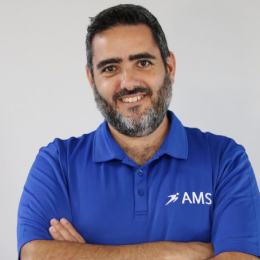
Moshe Vazana
Physiotherapist
With over 15 years of experience, Moshe is recognized for his precise, evidence-based approach. A physiotherapy graduate with advanced training in several methodologies, including the McKenzie Method (MDT) and the Mulligan Concept, he specializes in treating musculoskeletal and spinal conditions.
His international background and commitment to excellence enable him to provide care that is tailored, effective, and sustainable. Passionate about knowledge sharing, he is also actively involved in training the next generation of physiotherapy professionals.
Hello.
My dad has been suffering now from RLS. He has many other issues with regards to diabetes, heart disease, and kidney issues. Currently he has been admitted at the hospital for a low hemoglobin and is under investigation for other things.
Do you assess and treat your clients in the hospital setting? please let me know as my dad is suffering of pain at night.
Thank you kindly
Hello,
Yes we do hospital and Home occupational therapy visits in the Montreal area.